- Members Portal
- ABA Website

Analysis: RBA’s ‘Australia’s Economic Recovery and Access to Small Business Finance’
24 March 2021
An analysis of small business access to finance by the RBA shows demand for small business credit is subdued as they don’t want to take on the risk and prefer to fund expansion themselves.
Below the ABA highlights some novel data from this article in the RBA’s March quarter Bulletin.
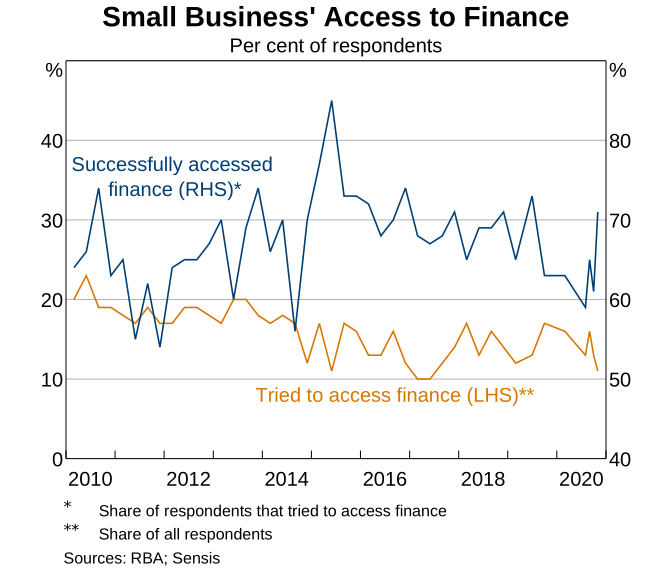
The figure below supports what we have heard from ABA members: in general, small business aren’t looking to obtain finance. This has been trending downwards from around 20% ten years ago, to between 10-15% in recent years. Of those who do seek funding, around 70% obtain it. This is a long-term trend over the past decade.
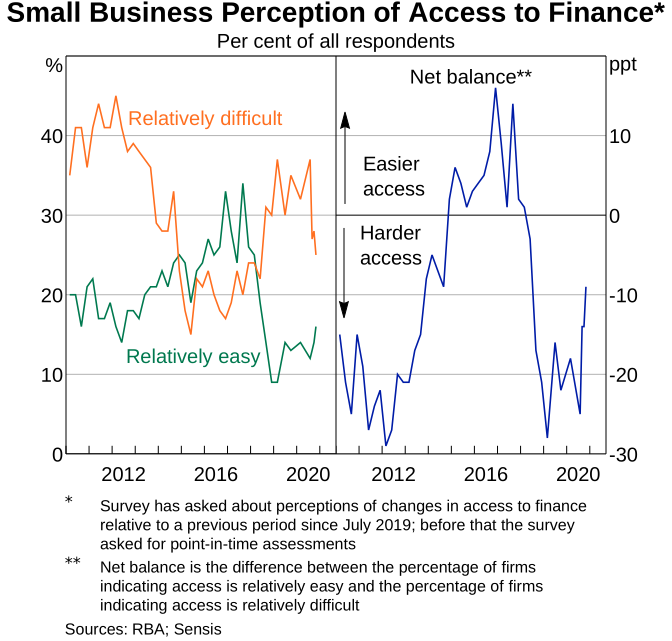
The figure below illustrates small business experience of access to finance, with a net balance illustrating whether it is overall easy (positive) or difficult (negative).
After a positive net balance from 2013 – 2017 the experience became negative in 2018, reaching levels not seen since 2012. However small businesses report access to finance becoming easier throughout 2020. RBA suggests this is due to the policy measures aimed at ensuring small business can access finance introduced in 2020.
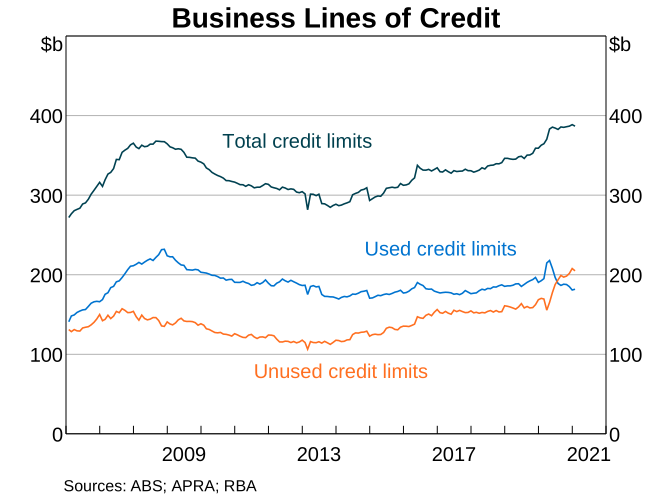
Total credit limits for small business is at an all-time high of nearly $400b. This doesn’t necessarily mean that small businesses are using it, with more than $200b remaining unused, but it is available to them.
This illustrates that banks are making credit available to small business, and have been increasingly doing so since 2016.
The difference (spread) between interest rates for large and small loans, and large businesses and SMEs, has not changed substantially in the last decade, following an increase during the GFC.
According to the RBA, liaison with small business suggests that interest rates are not influential in decisions not to seek finance.
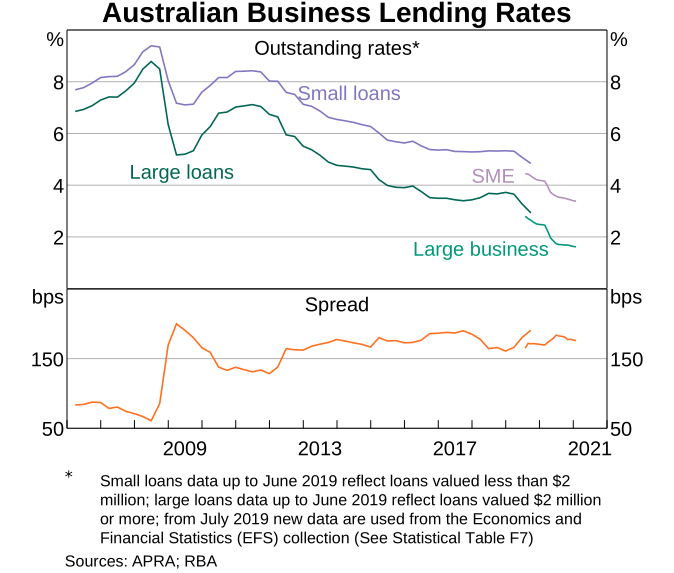
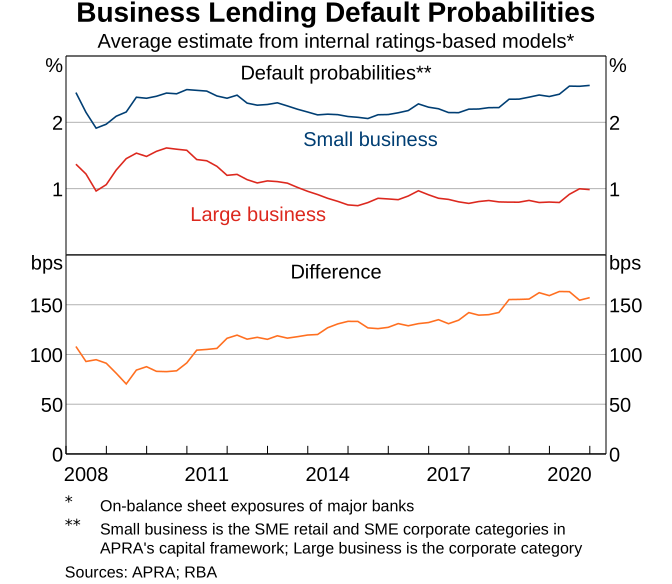
The difference in interest rates between large businesses and SMEs is reflective of the greater risk inherent in SME credit. Specifically, they are priced for a greater risk of default.
In the chart above we see a large increase in the spread during the GFC, which has never reversed. We can see this risk is reflective of the higher likelihood of SME defaults after the GFC, as shown in the chart below.
Given interest rates aren’t reported to be a factor in small business decisions about seeking finance, this does not appear to be too much of a concern. The problem still remains on the demand side.
Latest news
Key News: “The Cash Distribution Framework is an important piece of regulatory reform to ensure the continued availability of cash given the decline in its usage and recent uncertainties across the sector.” ABA CEO Simon Birmingham. Media release, 3 September 2026. Media & Communications Update: Political Update: Economic Update: Regulatory Update Upcoming Submissions Selected Media… Read more »
Key News: “You might just think it’s harmless letting somebody access your bank account and getting a few hundred bucks in return, but these are crime syndicates, these are money launderers. You may well be helping to scam a vulnerable Australian out of their life savings.” ABA CEO Simon Birmingham. Interview with 2SM’s Tim Webster,… Read more »
Key News: “Every dollar of bank profits that gets reinvested into bank capital, generates on the analysis we showed this week, $4.70 of economic activity across the Australian economy.” ABA CEO Simon Birmingham. Interview with Ross Greenwood, 21 June. Media & Communications Update: Political Update: Economic Update: Regulatory Update Upcoming Submissions Selected Media Warm regards,The… Read more »